Stubborn Appetites Raise the Steaks
Nov 2026
View available investments in your area

Sorry, we couldn't find any results matching
Please:

Key takeaways:
The United States is running its smallest cattle herd since 1951, and beef prices keep setting records, yet many shoppers refuse to trade down. Normally, prices this high would push consumers toward cheaper proteins, but Americans continue buying beef despite double-digit increases at the meat case. How is this possible? We believe the answer is stubbornness, and it is structural, not cyclical. We expect beef and cattle prices to remain high into 2027, with the principal downside risk being that macroeconomic conditions force the consumer to capitulate, rather than anything related to agriculture.
The supply squeeze
The size of the beef cow herd has now contracted for seven consecutive years, driven by drought, elevated input costs, and cycle economics. The potential for future recovery is hampered by the fact that today, with feeder prices so high, producers earn more selling heifers than retaining them to breed, which suppresses the future calf crop. A yearlong Southern-border closure to contain New World screw worm has pulled an estimated 1.2 million Mexican feeder cattle from the pipeline. Biology sets the clock, and we don’t expect meaningful expansion before 2028.
Where scarcity meets appetite
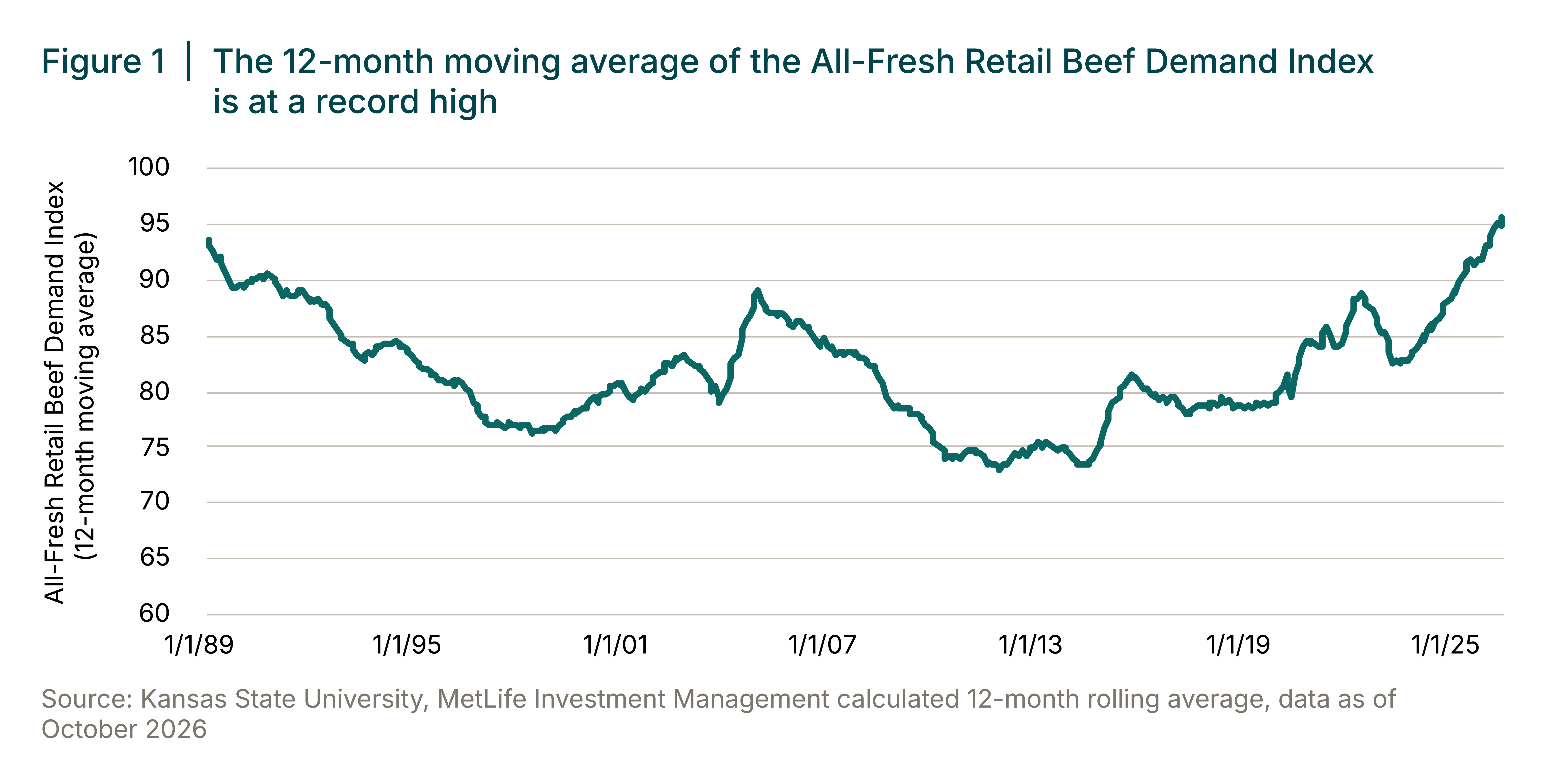
On the demand side, consumer appetites are historically strong. Kansas State University’s All-Fresh Beef Demand Index, which tracks how much beef was purchased relative to what that month's retail price would normally be expected to move, has been increasing for the last three years to an all-time high (Figure 1). While prices have been rising due to supply side constraints, demand has been increasing, pushing those prices even higher.
Why aren’t Americans quitting beef?
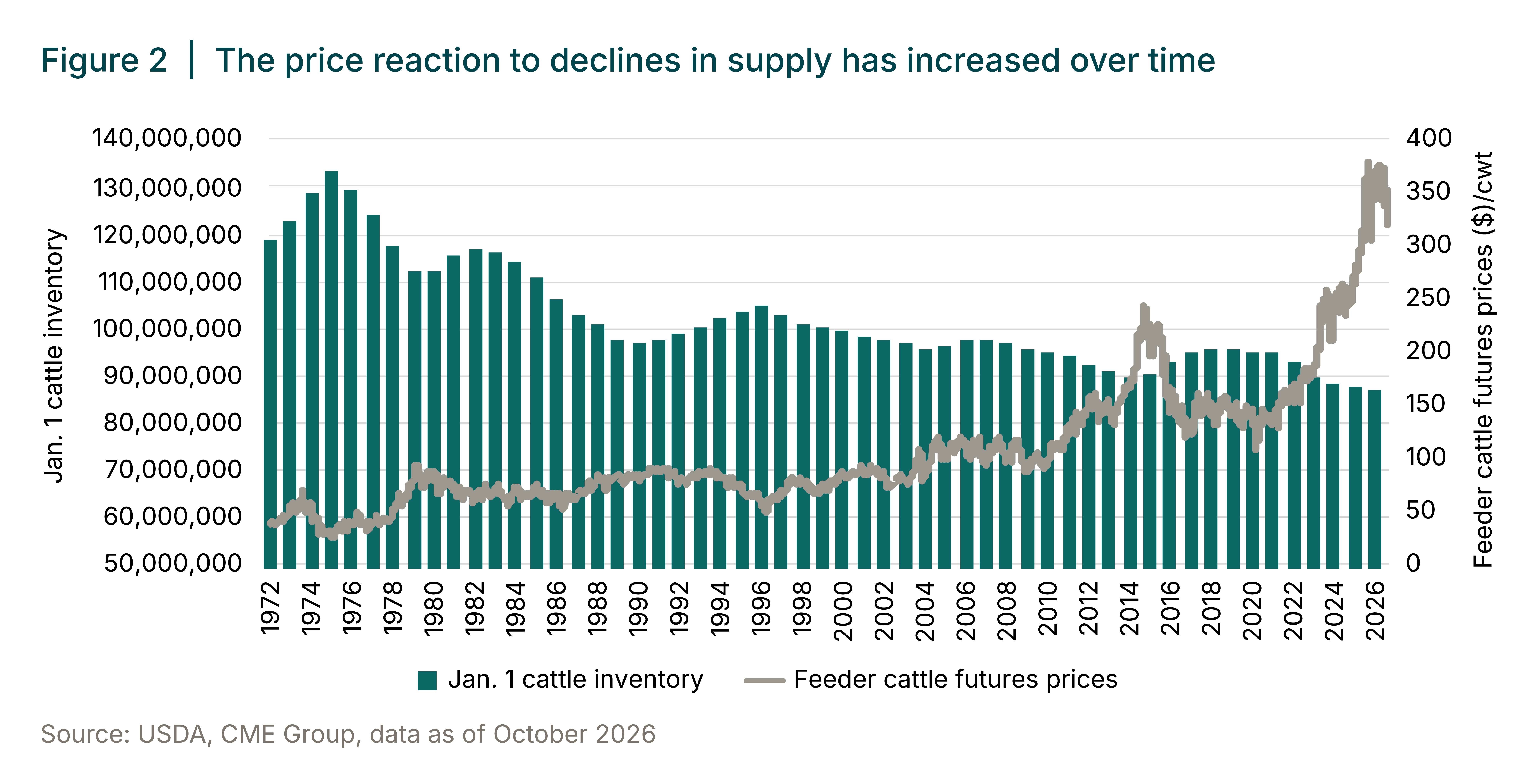
Consumers’ commitment to beef has strengthened over the last few decades. Economists measure how much shoppers cut back when prices rise, and for beef that number has been shrinking for 30 years. In the 1990s, a 1% price increase pushed beef buying down 0.77%;3 by 2010 the pullback had eased to about 0.42%,4 and today's studies put it as low as 0.32%.5 In plain terms, Americans have grown more willing to stomach higher prices, so the same contraction in the cattle herd and reduction in supply now causes a larger increase in prices than it would have a decade ago (Figure 2).
In past contractions, record prices eventually met resistance and volumes gave way. This time demand is climbing alongside record prices. Stubbornness, not scarcity, is what makes this cycle different.
Higher for longer
We expect prices to stay high for years. With no meaningful herd rebuild in sight and per-capita availability holding up only through record imports and heavier carcass weights, the structural floor supporting prices is high. Cattle and retail beef prices should hold near current levels and ease only gradually through 2028, with fresh record highs likely on any supply shock. We treat pullbacks—such as the correction from the spring high that followed the late-August pause of select beef import tariffs—as cyclical noise around a structurally firm demand base. The value chain should stay profitable overall, with cow-calf operators taking the lion's share while feedlots and packers trade the margin back and forth as leverage swings.
The limits of stubbornness
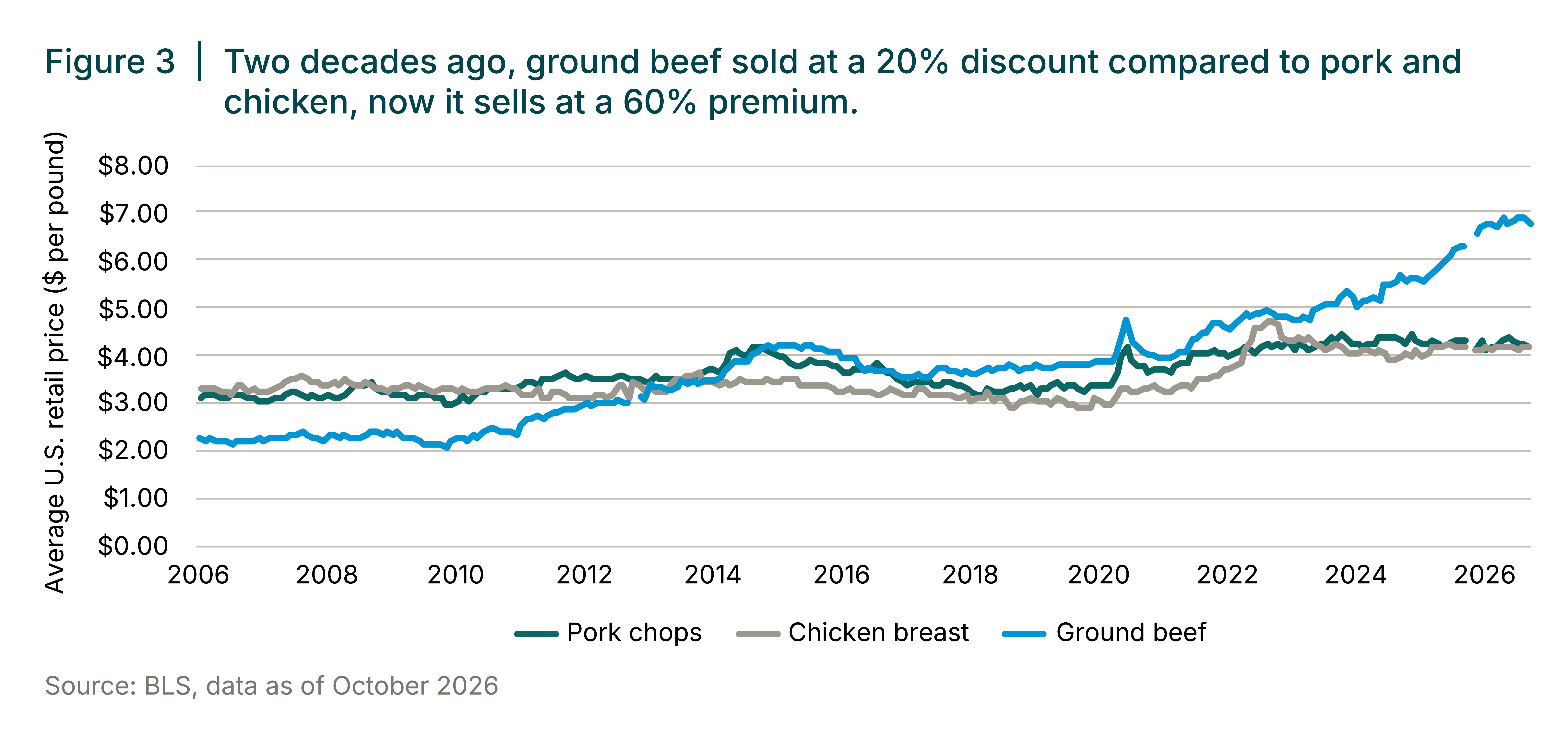
The dominant risk to conditions changing is the health of the consumer's wallet, not agriculture. Inelastic demand reflects willingness to pay, but that in turn presumes the ability to pay. A deteriorating economy—rising unemployment and thinner real income —could crack that resolve, forcing households to “trade down” and substitute toward chicken and pork at a widening discount to beef (Figure 3). These conditions could cause beef and cattle prices to settle to levels more in line with historical averages.
The odds of a broad economic downturn are slim in our view. Even amid rising rates and a bleak outlook for energy costs and inflation, the Bloomberg U.S. Recession Probability Forecast Index placed a 20% probability of a recession in 2027 as of late October. Secondary risks include further trade or tariff intervention that reprices the cutout, supply shocks that raise the price of feed and faster-than-expected herd rebuilding that pressures prices from 2028 onward.
Conclusion
Contracting supply and growing demand are coming together to push beef and cattle prices to historical highs. Working back down to prices that consumers were familiar with even five years ago will be slow-going. Absent a genuine income shock, the checkout line keeps saying the same thing: American consumers want their beef—and they're willing to pay for it.